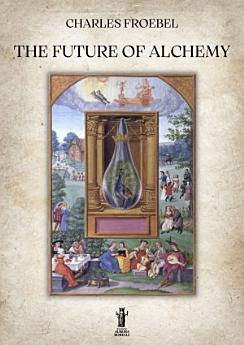
The Future of Alchemy
Acerca de este libro electrónico
The grandson of the more famous Friedrich Fröbel, the founder of Kindergarten, his family was part of that wave of German intellectuals who emigrated to America in the mid-19th century (the so-called "Forty-Eighters"), who brought a wave of natural philosophy and liberalism to the American scientific landscape.
The short essay The Future of Alchemy, which we present today to our readers, presents a fascinating and bold bridge between two seemingly irreconcilable worlds: the ancient mysticism of metal transmuters and the rigorous evolutionary biology of the 19th century. Written at a time when modern chemistry had relegated alchemy to the realm of superstition, Froebel undertakes an intellectual counter-current, seeking to recover not the erroneous practices of the past, but the immortal soul of the truth they preserved.
Froebel's originality lies in his redefinition of alchemy. He sees it not simply as an "immature science", but as a "beautiful primitive art". While chemistry limits itself to describing and manipulating matter for utilitarian purposes, medieval alchemy aimed at the creation of an ideal: the material perfection symbolized by the Philosopher's Stone. For the author, the alchemist was not a failed chemist, but an artist-hero who abandoned the field too early, discouraged by the inadequacy of his own means.
Descubrir más
Acerca del autor
Charles Froebel was a German scientist and philosopher who moved to the United States. A member of the New York Academy of Sciences, he contributed assiduously to high-profile popular science journals.
The grandson of the more famous Friedrich Fröbel, the founder of Kindergarten, his family was part of that wave of German intellectuals who emigrated to America in the mid-19th century (the so-called "Forty-Eighters"), who brought a wave of natural philosophy and liberalism to the American scientific landscape.