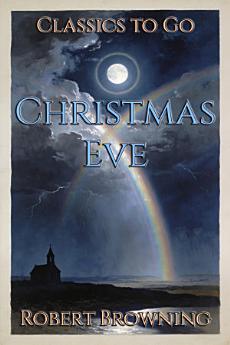
Christmas Eve: Restored Classics to Go Edition
About this ebook
Discover more
About the author
Robert Browning was born in London in 1812 and grew up in a cultivated, bookish household that encouraged his early love of poetry, music, and the dramatic arts. Though he never fit neatly into the public role of a celebrity poet, he became one of the most original voices of the Victorian age, steadily shaping a career that moved between bold experiments on the stage of verse and deeply psychological explorations of the human mind. Over the course of his life, he gained lasting recognition for his mastery of dramatic monologue, his inventive rhythms, and his ability to let speakers reveal themselves through speech, irony, and self-deception. His poetry often wrestles with faith, doubt, love, ambition, artistic failure, and the struggle to find meaning in a complicated world, making his work feel strikingly modern in its concern with inner life and moral ambiguity. Browning's achievement lies not only in his technical brilliance but also in his willingness to trust readers to listen closely and think deeply, rewarding attention with rich emotional and intellectual complexity. Today, he remains significant for the way he captures the contradictions of human character and the restless search for truth. Readers who enjoy psychologically layered poetry, philosophical depth, and voices that come alive on the page will find Browning especially rewarding.