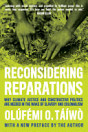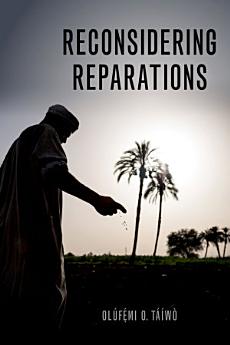
Reconsidering Reparations
2022年1月 · Oxford University Press
電子書籍
288
ページ
ツール
info
family_home
利用可能
info
この電子書籍について
Reparations for slavery have become a reinvigorated topic for public debate over the last decade. Most theorizing about reparations treats it as a social justice project - either rooted in reconciliatory justice focused on making amends in the present; or, they focus on the past, emphasizing restitution for historical wrongs. Olúfemi O. Táíwò argues that neither approach is optimal, and advances a different case for reparations - one rooted in a hopeful future that tackles the issue of climate change head on, with distributive justice at its core. This view, which he calls the "constructive" view of reparations, argues that reparations should be seen as a future-oriented project engaged in building a better social order; and that the costs of building a more equitable world should be distributed more to those who have inherited the moral liabilities of past injustices. This approach to reparations, as Táíwò shows, has deep and surprising roots in the thought of Black political thinkers such as James Baldwin, Martin Luther King Jr, and Nkechi Taifa, as well as mainstream political philosophers like John Rawls, Charles Mills, and Elizabeth Anderson. Táíwò's project has wide implications for our views of justice, racism, the legacy of colonialism, and climate change policy.
Reparations for slavery have become a reinvigorated topic for public debate over the last decade. Most theorizing about reparations treats it as a social justice project - either rooted in reconciliatory justice focused on making amends in the present; or, they focus on the past, emphasizing rest...
著者について
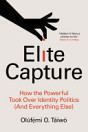
Olúfẹ́mi O. Táíwò is Associate Professor of Philosophy at Georgetown University. His theoretical work draws liberally from the Black radical tradition, contemporary social science, and histories of activism and activist thinkers. His public philosophy, including articles exploring intersections of climate justice and colonialism, has appeared in The New Yorker, The Guardian, The New Republic, The Nation, Foreign Affairs, The Philosopher, Aeon, and Boston Review. His book Elite Capture: How the Powerful Took Over Identity Politics (And Everything Else) is forthcoming from Haymarket.
Olúfẹ́mi O. Táíwò is Associate Professor of Philosophy at Georgetown University. His theoretical work draws liberally from the Black radical tradition, contemporary social science, and histories of activism and activist thinkers. His public philosophy, including articles exploring intersections o...
この電子書籍を評価する
ご感想をお聞かせください。
読書情報
スマートフォンとタブレット
Android や iPad / iPhone 用の Google Play ブックス アプリをインストールしてください。このアプリがアカウントと自動的に同期するため、どこでもオンラインやオフラインで読むことができます。
ノートパソコンとデスクトップ パソコン
Google Play で購入したオーディブックは、パソコンのウェブブラウザで再生できます。
電子書籍リーダーなどのデバイス
Kobo 電子書籍リーダーなどの E Ink デバイスで読むには、ファイルをダウンロードしてデバイスに転送する必要があります。サポートされている電子書籍リーダーにファイルを転送する方法について詳しくは、ヘルプセンターをご覧ください。