About this ebook
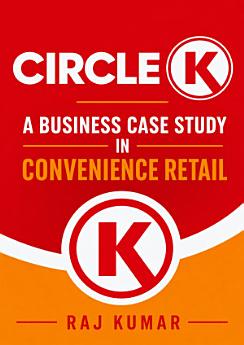
Circle K: A Business Case Study in Convenience Retail explores how one of the world’s best-known convenience store brands competes in a fast-moving, customer-focused marketplace. Written for business students, retail professionals, entrepreneurs, and investors, this practical case study examines the strategies, operating model, and market forces that shape Circle K’s performance. Raj Kumar analyzes convenience retail through key business themes, including brand positioning, store formats, geographic expansion, franchising, merchandising, pricing, customer experience, supply-chain management, and technology. The book considers how a global convenience retailer responds to changing consumer habits, fuel and food demand, competitive pressure, labor challenges, and the growing importance of digital commerce and data-driven decision-making. By connecting retail theory with real-world business questions, this study helps readers understand how convenience stores create value through accessibility, speed, product mix, and operational consistency. It also highlights the opportunities and risks involved in scaling a retail brand across diverse markets while maintaining local relevance. Whether used as a teaching resource, a management reference, or an introduction to convenience store economics, Circle K: A Business Case Study in Convenience Retail offers a structured framework for evaluating retail strategy and business growth. Readers will gain insights into convenience store management, international retail expansion, competitive strategy, customer loyalty, and the future of the global convenience industry.
Circle K: A Business Case Study in Convenience Retail explores how one of the world’s best-known convenience store brands competes in a fast-moving, customer-focused marketplace. Written for business students, retail professionals, entrepreneurs, and investors, this practical case study examines ...
Discover more
Ratings and reviews
1 review
About the author
Raj Kumar is a business writer and analyst focused on retail strategy, convenience stores, consumer markets, and organizational growth. His work examines how companies build competitive advantage through branding, operations, customer experience, and market expansion. In Circle K: A Business Case Study in Convenience Retail, he provides an accessible framework for understanding global convenience retail and the strategic decisions behind a major industry brand.
Raj Kumar is a business writer and analyst focused on retail strategy, convenience stores, consumer markets, and organizational growth. His work examines how companies build competitive advantage through branding, operations, customer experience, and market expansion. In Circle K: A Business Case...
Rate this ebook
Tell us what you think.
Reading information
Smartphones and tablets
Install the Google Play Books app for Android and iPad/iPhone. It syncs automatically with your account and allows you to read online or offline wherever you are.
Laptops and computers
You can listen to audiobooks purchased on Google Play using your computer's web browser.
eReaders and other devices
To read on e-ink devices like Kobo eReaders, you'll need to download a file and transfer it to your device. Follow the detailed Help Center instructions to transfer the files to supported eReaders.