Rreth këtij libri elektronik
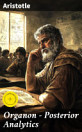
Aristotle's "Posterior Analytics" is a cornerstone of epistemology and scientific methodology, delving into the nature of knowledge and the principles of demonstration. Through a rigorous exploration of syllogistic reasoning, Aristotle outlines the foundational elements of scientific knowledge, distinguishing between what is known and how it is known. His analytical style reflects the systematic clarity typical of his works, embodying the transition from pre-Socratic inquiry to a more formalized study of logic and science. Set against the backdrop of the philosophical inquiries of Classical Greece, this text not only elucidates the mechanisms of deducing knowledge but also establishes a dialectic framework for understanding empirical evidence and causation. Aristotle, born in 384 BCE, was a polymath whose extensive inquiries spanned numerous subjects, including ethics, politics, and biology. The intellectual milieu of his time, marked by a burgeoning quest for rational explanation, undoubtedly influenced his writing of "Posterior Analytics." His mentorship under Plato tempered by his later critiques of Platonic ideals informs his inquiries into the nature of demonstrable knowledge. Coupled with his empirical observations, these experiences coalesce into a profound analysis of how knowledge can be attained and validated. For scholars and students both familiar and unfamiliar with Aristotelian thought, "Posterior Analytics" stands as an essential text for understanding the development of scientific reasoning. It invites readers into a dialogue about the nature of knowledge, prompting them to consider not just the conclusions we reach, but the methodologies used to arrive at those conclusions. Engaging with this work will enhance one's appreciation for the philosophical foundations that underpin science and logic today.
Aristotle's "Posterior Analytics" is a cornerstone of epistemology and scientific methodology, delving into the nature of knowledge and the principles of demonstration. Through a rigorous exploration of syllogistic reasoning, Aristotle outlines the foundational elements of scientific knowledge, d...
Rreth autorit
Aristotle (384–322 BCE) stands as a towering figure in the annals of Western philosophy, whose works have profoundly influenced various realms of human knowledge, from metaphysics to ethics, politics, and biology. A student of Plato at the Academy in Athens and later the tutor of Alexander the Great, Aristotle formulated an extensive corpus of writings, encompassing a comprehensive system of thought. Among his most significant contributions is 'Posterior Analytics,' a foundational text in the field of epistemology and the philosophy of science. In this work, Aristotle explores the underpinnings of scientific knowledge and the principles of logical deduction, establishing the groundwork for empirical inquiry. His philosophical approach is characterized by an empirical method that seeks to understand the principles underlying observable phenomena, standing as a forerunner to the scientific method. Aristotle's literary style is meticulous and analytical, marked by clarity and precision in argumentation. His writings not only reflect a profound intellectual rigor but also demonstrate his belief in the potential for human reason to comprehend the natural order. His influence extends through the Middle Ages and the Renaissance, persisting to the present day, as his work continues to inspire and inform innumerable fields of study.
Aristotle (384–322 BCE) stands as a towering figure in the annals of Western philosophy, whose works have profoundly influenced various realms of human knowledge, from metaphysics to ethics, politics, and biology. A student of Plato at the Academy in Athens and later the tutor of Alexander the Gr...
Vlerëso këtë libër elektronik
Na trego se çfarë mendon.
Informacione për leximin
Telefona inteligjentë dhe tabletë
Instalo aplikacionin "Librat e Google Play" për Android dhe iPad/iPhone. Ai sinkronizohet automatikisht me llogarinë tënde dhe të lejon të lexosh online dhe offline kudo që të ndodhesh.
Laptopë dhe kompjuterë
Mund të dëgjosh librat me audio të blerë në Google Play duke përdorur shfletuesin e uebit të kompjuterit.
Lexuesit elektronikë dhe pajisjet e tjera
Për të lexuar në pajisjet me bojë elektronike si p.sh. lexuesit e librave elektronikë Kobo, do të të duhet të shkarkosh një skedar dhe ta transferosh atë te pajisja jote. Ndiq udhëzimet e detajuara në Qendrën e ndihmës për të transferuar skedarët te lexuesit e mbështetur të librave elektronikë.