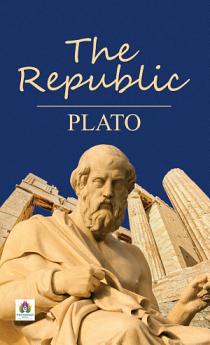
The Republic

· Namaskar Books
Ebook
504
Pages
Tools

About this ebook

The Republic stands as one of the most influential works in the history of philosophy and political theory. Structured as a Socratic dialogue, this book begins with an inquiry into the nature of justice-specifically, whether the just man is happier than the unjust man. To answer this, Socrates constructs an ideal city-state, as a macro-scale model of the human soul.

This work is famous for its rigorous exploration of the 'Theory of Forms', arguing that the physical world is a mere shadow of a higher, eternal reality. Central to the book are the Allegory of the Cave, which illustrates the transformative power of education and the concept of the Philosopher King, a ruler guided by wisdom rather than ambition. Beyond politics, the text delves into the tripartite nature of the soul-reason, spirit and appetite-concluding that true harmony is achieved, when reason governs the other two.

The Republic stands as one of the most influential works in the history of philosophy and political theory. Structured as a Socratic dialogue, this book begins with an inquiry into the nature of justice-specifically, whether the just man is happier than the unjust man. To answer this, Socrates co...

Discover more

About the author

Plato (c. 427-347 BCE) was a Greek philosopher whose literary work laid the absolute foundation of Western intellectual history. A student of Socrates and the teacher of Aristotle, he bridged the transition from early Greek thought to a systematic exploration of ethics, politics and metaphysics. His most significant contribution is the 'Theory of Forms', which suggests that our physical world is an imperfect reflection of a higher, eternal reality. To Plato, the chair you sit on is merely a shadow; the 'Form' of the chair in the realm of ideas is the ultimate truth.

In 387 BCE, he founded 'The Academy' in Athens, often cited as the first university in the Western world. Through his famous 'Dialogues,' Plato used the character of Socrates to challenge conventional wisdom and encourage intellectual inquiry.
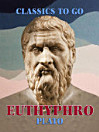
Plato (c. 427-347 BCE) was a Greek philosopher whose literary work laid the absolute foundation of Western intellectual history. A student of Socrates and the teacher of Aristotle, he bridged the transition from early Greek thought to a systematic exploration of ethics, politics and metaphysics. ...

Rate this ebook

Tell us what you think.

Reading information

Smartphones and tablets
Install the Google Play Books app for Android and iPad/iPhone. It syncs automatically with your account and allows you to read online or offline wherever you are.
Laptops and computers
You can listen to audiobooks purchased on Google Play using your computer's web browser.
eReaders and other devices
To read on e-ink devices like Kobo eReaders, you'll need to download a file and transfer it to your device. Follow the detailed Help Center instructions to transfer the files to supported eReaders.