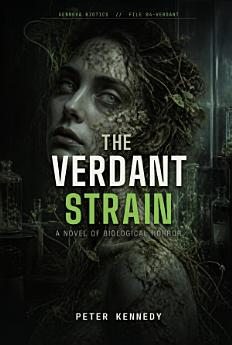
The Verdant Strain
About this ebook
For years, the operation remained safely contained within climate-controlled R&D domes. But true to Umbrella's hubris, the division's directors demanded field data. They needed a controlled environment with high humidity, equatorial sunlight, and zero local oversight to test their accelerated evolution models.
They chose a remote, privately owned island chain in the Philippine archipelago-remote enough to avoid international maritime routes, isolated enough to ensure total quarantine.
They called it the "Green Tide." It was supposed to be a revolution in terraforming and targeted defoliation.
Instead, it became an ecological extinction-level event. Here is what went wrong:
1. The Super-Adaptability of Tropical Ecosystems
Umbrella's botanists engineered hybrids designed for aggressive nutrient absorption, rapid cellular division, and resilience against standard herbicides. In a temperate lab, these traits were controllable through strict temperature and UV regulation. Released into the hyper-diverse, nutrient-rich Philippine tropics, the hybrids didn't just survive-they unlocked a biological cheat code. Local flora, vines, and canopy trees cross-pollinated with GenNova's genetically modified specimens via wind and avian vectors. Within months, the island's natural plant life underwent forced, grotesque mutations. Normal jungles became carnivorous, fast-growing labyrinths that consumed local fauna and expanded their borders outward at terrifying speeds.
2. The T-Virus Vector Spillover
GenNova didn't just engineer plants; they utilized tailored viral vectors (variants of the T-Virus and Plant 43 derivatives) to accelerate gene-splicing in the field. They assumed the pathogens would remain inert outside the laboratory hosts. They were wrong. The viral agents bled into the island's groundwater table and agricultural runoff, infecting local insect populations, fruit bats, and wild boars. The result was a grotesque menagerie of flora-fauna hybrids: carnivorous pitcher plants with mobility, vines that hunted by seismic vibration, and fauna acting as mobile spore-dispensers, carrying mutated fungal blooms on their rotting hides.
3. The Hive-Mind Canopy
The crowning achievement of GenNova's research was Project Chloris: a genetically engineered, parasitic vine network capable of rudimentary collective intelligence and pheromone-based communication. In the lab, it responded to terminal prompts. In the wild, it connected the entire island's root system into a single, massive neural network. The jungle stopped behaving like an ecosystem and started behaving like an organism. When the automated facility attempted to deploy fire-suppression or chemical defoliants, the jungle fought back-massing root systems to crush research outposts, weaponizing toxic pollen mists, and dragging security patrols beneath the soil to feed the biomass.
Take a journey into the horror, can you survive
Discover more
About the author
About the Author
Peter Kennedy has always found deep fascination in the creative landscapes of his own mind, channeling his imagination into both visual art and the exploration of occult philosophies. An avid reader with a lifelong passion for fiction—particularly science fiction—Peter navigated the challenges of ADHD and hyper-focus by finding new ways to bring his stories to life through the evolution of modern technology. When he isn't diving deep into speculative worlds, he is crafting his own.
“Hope you enjoy my books.” — Peter Kennedy