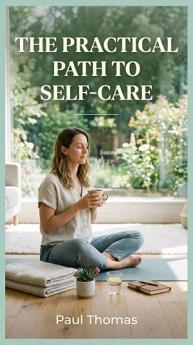
The Practical Path to Self-Care
About this ebook
The Practical Path to Self-Care is crafted as a comprehensive and accessible guide, fusing the worlds of language learning, personal development, and meaningful lifestyle management. Rooted in the rigor of self-help, stress management, and healthy living, this book breaks new ground by framing self-care not only as a set of helpful actions, but as an empowering mindset and an ongoing language of life—one that spans cultural boundaries and invites growth. Importantly, the book caters to learners of both English and Malay, forming linguistic bridges and broadening the reach of self-care wisdom.
The Philosophy of Self-Care
At its core, self-care is the intentional act of nurturing one’s own physical, mental, emotional, and social wellbeing. It demands mindfulness—a conscious awareness of one’s needs—and an active commitment to honoring them. This philosophy rejects the notion of self-care as selfishness, reframing it as the most respectful and sustainable way to care for others, fulfill responsibilities, and contribute meaningfully to one’s community.
Self-care vocabulary is drawn from daily routines, emotional states, needs, and actions. It is lived out in words such as rest, balance, reflection, nutrition, and connection—terms that reflect essential components of a healthy existence. In Malay, these ideas surface as rehat (rest), seimbang (balance), renungan (reflection), pemakanan (nutrition), and hubungan (connection). Understanding these terms, their nuances, and real-world applications anchors language learning in the practical realm of self-improvement.
Self-Care Through a Multilingual Lens
Language is more than a medium of communication—it is the vessel through which we interpret, understand, and transform our experiences. By exploring self-care using both English and Malay, learners gain access to new ways of seeing themselves, their practices, and their wider communities. Each language offers subtle distinctions that enrich our conceptualization of wellbeing. For instance, while mindfulness in English highlights alert presence, the Malay equivalent kesedaran diri strikes a note of self-awareness and personal consciousness.
By learning essential vocabulary in both languages, you cultivate a deeper understanding of yourself and those around you. This enables more effective conversations about health, clearer boundaries, and greater resilience against stress.
The Structure and Purpose of This Book
The Practical Path to Self-Care is designed for learners and seekers at every stage—beginners encountering a new language, intermediate readers refining their skills, and advanced individuals looking for fresh insight and precision. Each chapter is organized around key themes in self-care, integrating:
Essential Vocabulary: Carefully chosen words and phrases in English and Malay, accompanied by clear definitions and phonetic guidance.
Contextual Examples: Practical, real-life sentences that demonstrate correct usage and cultural context.
Pronunciation Tips: Guidance on enunciating unfamiliar or confusing terms.
Linguistic Differences: Insights into how English and Malay express concepts of care, balance, emotion, and growth.
Practical Applications: Situational advice and self-care scenarios drawn from both languages and cultures.
Learning Strategies: Suggestions for memorization, practice, and reinforcement that support deeper retention and understanding.
Common Mistakes: Addressing pitfalls in vocabulary, meaning, and usage to clarify ambiguity and prevent confusion.
This clear and patient sequence supports both linguistic mastery and personal transformation. With each chapter, you will acquire not only the words to talk about self-care, but also the confidence and clarity to live it.
The Cultural Context of Self-Care
Self-care is shaped by cultural values and beliefs about health, rest, and human connection. For many Western readers, self-care is closely tied to ideas of autonomy and personal responsibility. In many Asian settings, including Malay-speaking communities, jaga diri (self-care) harmonizes with family, community, and collective wellbeing. This book respects and integrates these views, celebrating both independence and interdependence.
By learning the vocabulary and frameworks of both English and Malay, readers are empowered to develop a flexible, adaptive approach. Whether you are setting boundaries, asking for help, managing stress, or cultivating routines, your expanded vocabulary will allow you to act with both confidence and cultural sensitivity.
Why Vocabulary Matters in Self-Care
Words are tools that shape our thoughts, feelings, and decisions. Expanding your vocabulary around self-care equips you to name your needs, explain your feelings, and seek support effectively. For example, being able to articulate the difference between tired and burnt out—or between rehat seketika (short rest) and rehat berpanjangan (extended rest)—can transform vague discomfort into actionable insight.
This book recognizes that healthy living is not simply about adopting new habits, but also about reimagining and enriching the language we use every day. Through focused vocabulary exploration, you build the clarity to advocate for yourself, set limits, affirm your priorities, and find meaning in the journey.
The Goals of This Book
The Practical Path to Self-Care sets out to achieve several core aims:
Empower Self-Help: Arm readers with relevant vocabulary and communication skills that foster resilience, mindfulness, and lifelong growth.
Facilitate Personal Growth: Support readers as they build healthier routines, clarify their goals, and navigate the challenges of stress and change.
Strengthen Cross-Cultural Literacy: Provide a comparative analysis of self-care in English and Malay, enabling richer interactions at home, in the workplace, and within multicultural communities.
Promote Healthy Living: Connect linguistic competence with concrete practices for physical health, mental balance, and emotional wellness.
Deepen Understanding: Move beyond rote memorization by offering context-sensitive explanations, reflective exercises, and storytelling.
By following the chapters ahead, you will not only gain knowledge of words and their meanings but will also learn to embody these words as daily practices. This integrative approach is vital for aspiring learners, educators, and anyone seeking a more intentional, language-rich journey of growth.
Inviting You Forward
Every learning journey begins with a single step. Whether you come to this book as a student, a teacher, a caregiver, or a seeker of better health and happiness, you will find practical wisdom tailored to your needs. With each chapter, you will be guided to reflect, apply, and grow—at your own pace and in your own way.
The vocabulary you acquire will enable conversations about boundaries, rest, joy, and discipline. It will help you recognize the signs of stress, express appreciation, and set realistic expectations for yourself and others. Along the way, you will find encouragement to pause and ask, “What do I need in this moment? How can I care for myself so I can care for others?” You will practice these skills in both English and Malay, discovering the richness each language brings to the quest for wellbeing.
In these pages, self-care is more than a list of tips or recipes for relaxation. It is a journey of recognition and respect, a practical path paved with small, powerful words and acts. As you begin, remember: every step you take, every new phrase you learn, is a gift to yourself and the wider world you move through.
Welcome to your practical path to self-care—one that speaks to mind, body, heart, and spirit, in every language you choose to live by.
Discover more
Ratings and reviews
About the author
I am Paul Thomas, an author who explores personal growth through the intersection of reflection, motivation, and intentional daily practice. My writing is centered on the idea that progress does not always come from dramatic change, but from learning to notice what matters, question what no longer serves us, and make small decisions with greater purpose. I use journaling as a practical tool for helping readers organize their thoughts, uncover new possibilities, and stay connected to the person they want to become. Through reflective prompts and encouraging guidance, my books aim to support readers in building clarity, strengthening perseverance, and creating a more focused, meaningful, and self-directed life.