Über dieses E-Book
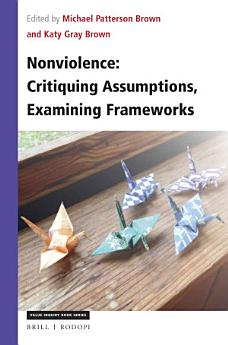
Many judgments regarding what is good or bad, possible or impossible, rely upon unspoken assumptions or frameworks which are used to view and evaluate events and actions. Philosophers uncover these hidden aspects of thoughts and judgments, scrutinizing them for soundness, validity, and fairness. These assumptions and frameworks permeate the topics of violence, nonviolence, war, conflict, and reconciliation; and these assumptions influence how we address these problems and issues. The papers in this volume explore what kind of assumptions and frameworks would be needed in order for people to see nonviolence as a sensible approach to contemporary problems. Topics include conceptions of positive peace, nonviolence and international structures, and perspectives on peace education. Contributors are Elizabeth N. Agnew, Andrew Fitz-Gibbon, William C. Gay, Ronald J. Glossop, Ian M. Harris, John Kultgen, Joseph C. Kunkel, Douglas Lewis, Danielle Poe and Harry van der Linden.
Many judgments regarding what is good or bad, possible or impossible, rely upon unspoken assumptions or frameworks which are used to view and evaluate events and actions. Philosophers uncover these hidden aspects of thoughts and judgments, scrutinizing them for soundness, validity, and fairness. ...
Autoren-Profil
Michael Patterson Brown, Ph.D. is a peace educator, activist, and philosopher who has worked with the Fellowship of Reconciliation.
Katy Gray Brown, Ph.D., teaches philosophy and peace studies at Manchester University in Indiana, home to the first undergraduate peace studies program.
Katy Gray Brown, Ph.D., teaches philosophy and peace studies at Manchester University in Indiana, home to the first undergraduate peace studies program.
Michael Patterson Brown, Ph.D. is a peace educator, activist, and philosopher who has worked with the Fellowship of Reconciliation.
Katy Gray Brown, Ph.D., teaches philosophy and peace studies at Manchester University in Indiana, home to the first undergraduate peace studies program.
Dieses E-Book bewerten
Deine Meinung ist gefragt!
Informationen zum Lesen
Smartphones und Tablets
Nachdem du die Google Play Bücher App für Android und iPad/iPhone installiert hast, wird diese automatisch mit deinem Konto synchronisiert, sodass du auch unterwegs online und offline lesen kannst.
Laptops und Computer
Im Webbrowser auf deinem Computer kannst du dir Hörbucher anhören, die du bei Google Play gekauft hast.
E-Reader und andere Geräte
Wenn du Bücher auf E-Ink-Geräten lesen möchtest, beispielsweise auf einem Kobo eReader, lade eine Datei herunter und übertrage sie auf dein Gerät. Eine ausführliche Anleitung zum Übertragen der Dateien auf unterstützte E-Reader findest du in der Hilfe.