Información sobre este eBook
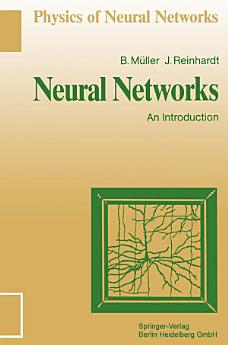
The mysteries of the human mind have fascinated scientists and philosophers alike for centuries. Descartes identified our ability to think as the foundation stone of ontological philosophy. Others have taken the human mind as evidence of the existence of supernatural powers, or even of God. Serious scientific in vestigation, which began about half a century ago, has partially answered some of the simpler questions (such as how the brain processes visual information), but has barely touched upon the deeper ones concerned with the nature of consciousness and the possible existence of mental features transcending the biological substance of the brain, often encapsulated in the concept "soul". Besides the physiological and philosophical approaches to these questions, so impressively presented and contrasted in the recent book by Popper and Ec cles [P077), studies of formal networks composed of binary-valued information processing units, highly abstracted versions of biological neurons, either by mathematical analysis or by computer simulation, have emerged as a third route towards a better understanding of the brain, and possibly of the human mind. Long remaining - with the exception of a brief period in the early 1960s - a rather obscure research interest of a small group of dedicated scientists scattered around the world, neural-network research has recently sprung into the limelight as a "fashionable" research field.
The mysteries of the human mind have fascinated scientists and philosophers alike for centuries. Descartes identified our ability to think as the foundation stone of ontological philosophy. Others have taken the human mind as evidence of the existence of supernatural powers, or even of God. Serio...
Descubre más
Valorar este eBook
Danos tu opinión.
Información sobre cómo leer
Smartphones y tablets
Instala la aplicación Google Play Libros para Android y iPad/iPhone. Se sincroniza automáticamente con tu cuenta y te permite leer contenido online o sin conexión estés donde estés.
Ordenadores portátiles y de escritorio
Puedes usar el navegador web del ordenador para escuchar audiolibros que hayas comprado en Google Play.
eReaders y otros dispositivos
Para leer en dispositivos de tinta electrónica, como los lectores de libros electrónicos de Kobo, es necesario descargar un archivo y transferirlo al dispositivo. Sigue las instrucciones detalladas del Centro de Ayuda para transferir archivos a lectores de libros electrónicos compatibles.