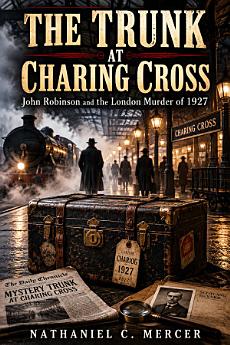
The Trunk at Charing Cross: John Robinson and the London Murder of 1927
About this ebook
erased.
In May 1927, railway workers at Charing Cross Station opened an abandoned trunk after an
unbearable smell began escaping from inside. What they discovered launched one of
interwar London’s most disturbing murder investigations: the dismembered remains of a
woman later identified as Minnie Alice Bonati.
The investigation soon led Scotland Yard to John Robinson, a struggling estate agent
connected to offices in Rochester Row. Detectives reconstructed the journey of the trunk
through London, followed laundry markings and witness testimony, uncovered small but
significant physical clues, and examined Robinson’s extraordinary attempts to conceal what
had happened.
But the central question remained fiercely disputed.
Had Minnie Bonati been deliberately murdered, or had an accidental confrontation ended in
death followed by panic and concealment?
The prosecution relied heavily on forensic pathologist Sir Bernard Spilsbury, whose
interpretation of Minnie’s injuries challenged Robinson’s account and helped turn a
gruesome disposal case into a murder prosecution.
The Trunk at Charing Cross reconstructs the crime, investigation, Old Bailey trial, and
execution that followed while placing the case within the changing world of 1920s London.