About this ebook
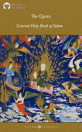
Muslims believe the Quran was orally revealed by God to the final Islamic prophet Muhammad through the angel Gabriel incrementally over a period of some 23 years, beginning on the Laylat al-Qadr, when Muhammad was 40, and concluding in 632, the year of his death. Muslims regard the Quran as Muhammad's most important miracle, a proof of his prophethood, and the culmination of a series of divine messages starting with those revealed to the first Islamic prophet Adam, including the holy books of the Torah, Psalms, and Gospel in Islam.
The Quran is believed by Muslims to be God's own divine speech providing a complete code of conduct across all facets of life. This has led Muslim theologians to fiercely debate whether the Quran was "created or uncreated." According to tradition, several of Muhammad's companions served as scribes, recording the revelations. Shortly after Muhammad's death, the Quran was compiled on the order of the first caliph Abu Bakr (r. 632–634) by the companions, who had written down or memorized parts of it. Caliph Uthman (r. 644–656) established a standard version, now known as the Uthmanic codex, which is generally considered the archetype of the Quran known today. There are, however, variant readings, with some differences in meaning.
Discover more
About the author
John Medows Rodwell (1808–1900) was an English clergyman of the Church of England and an Islamic studies scholar, who translated the Qur'an into English.
Rodwell's Qur'an translation The Koran was first published in 1861. In the 1994 Everyman Library edition the Surahs, which Rodwell originally ordered chronologically, have been put back in the traditional order, from long to short. Rodwell's outdated preface and professor G. Margoliouth's introductory notes have been replaced by a new introduction by Alan Jones, and some of Rodwell's obsolete notes have been removed as well.
It is believed that the Holy Quran was orally revealed by God to the final Islamic prophet Muhammad