About this ebook
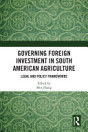
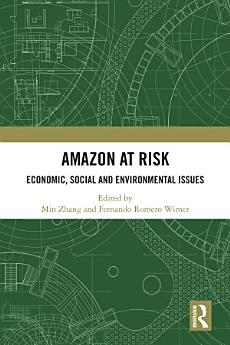
Readers will gain a critical understanding of the structural tensions between conservation and development through landmark cases, including the Chevron pollution lawsuit, Ecuador’s Yasuní referendum, and illegal mining in Peru’s Madre de Dios. The concluding assessment of the Amazon’s tipping point underscores the urgency of rainforest protection for global climate stability. Additionally, the book offers historical and structural analytical tools for exploring the complex relationship between society and nature.
This volume will be valuable for researchers, policymakers, and practitioners in the fields of environmental governance, economic history, political ecology, and Latin American studies.
Discover more
About the author
Min Zhang is Associate Professor at the Center for American Studies, Nanjing Agricultural University, China. Her research interest is international environmental governance.
Fernando Romero Wimer is Professor of History from the National University of the South (UNS), Argentina. He earned his master’s degree in development and territorial management from UNS and his PhD in history from the University of Buenos Aires (UBA), Argentina. He currently serves as a professor of undergraduate and graduate courses in international relations at the Federal University for Latin American Integration (UNILA), Brazil, the director of the Interdisciplinary Group for Studies and Research on Transnational Capital, States, Dominant Classes, and Conflict in Latin America and the Caribbean (GIEPTALC) and of the Center for Studies on Nature and Capital in Latin America and the Caribbean (NUNACAL) at the Mercosur Institute for Advanced Studies (IMEA), Brazil. He is also a researcher at the Collective for Social Studies and Research (CEISO) of Argentina and at the Interdisciplinary Center for Agrarian Studies (CIEA) at UBA.