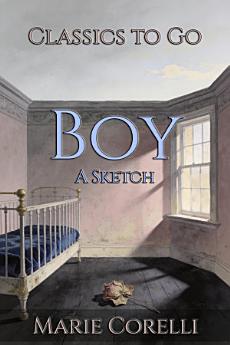
Boy: Restored Classics to Go Edition
About this ebook
Discover more
About the author
Marie Corelli was a bestselling English novelist and one of the most widely read writers of the late Victorian and Edwardian eras, though her life was as striking as her fiction. Born in 1855 and largely self-educated, she built her career from an outsider's position, cultivating a public persona as dramatic and independent as the heroines and moral vision that filled her novels. She became famous for prose that blended romance, melodrama, spiritual speculation, social criticism, and a strong sense of moral purpose, winning an enormous readership while also provoking sharp debate among critics. Her work often turns to questions of faith, temptation, the corruption of modern life, and the search for higher meaning, themes that still resonate in an age marked by uncertainty, spectacle, and competing values. Corelli's popularity in her own time was extraordinary, and her legacy lies not only in her sales but in her ability to speak directly to readers hungry for emotional intensity and ethical clarity. Today she remains significant as a reminder that literary influence is not measured by critical approval alone, and that popular fiction can capture the anxieties and aspirations of an era with remarkable force. Readers who enjoy atmospheric storytelling, moral drama, and outspoken women writers with a flair for the grand and the fervent are especially likely to find her compelling.