About this ebook
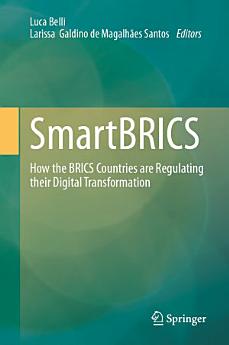
Adopting a critical approach, this volume acknowledges that digital transformation processes are not exempt from criticism, despite offering unique opportunities for developing countries to become global leaders. In addition to mapping the digital transformation processes of the BRICS countries, this book provides valuable insights into their approaches, highlighting both limitations and notable success stories. These insights are beneficial for researchers, policymakers, and practitioners alike.
This volume is the result of an exceptional collaboration between CTS-FGV, the Center for Technology and Society at Fundação Getulio Vargas Law School, Rio de Janeiro, and UNU-EGOV, the United Nations University Operating Unit on Policy-Driven Electronic Governance.
About the author
Luca Belli, Ph.D., holds a doctorate in public law from the Université Panthéon-Assas, Paris 2. He is a Professor at FGV Direito Rio, where he coordinates the FGV Center for Technology and Society (www.cts.fgv.br) and the CyberBRICS project (www.cyberbrics.info). Luca is a member of the Board of the Alliance for Affordable Internet, Editor of the International Data Privacy Law Journal of Oxford University Press, and Director of the conference CPDP LatAm, Computers Privacy and Data Protection Latin America (www.cpdp.lat). He is the author of more than 50 publications on Internet regulation and digital policy.
Larissa Galdino de Magalhães Santos, Ph.D., holds a doctorate in Political Science from Unicamp. She is an associate researcher at the United Nations University, Electronic Governance Unit (UNU-EGOV), and a Researcher at the Center for Technology and Society at FGV and CyberBRICS, Law School at Fundação Getúlio Vargas. Her research focuses on government technology and innovation, with a special emphasis on open data, smart cities, and digital transformation strategies. Larissa is the Co-chair of the Open Data Charter Implementation Group and a Professional Fellow at Fundação Getúlio Vargas Europe.