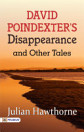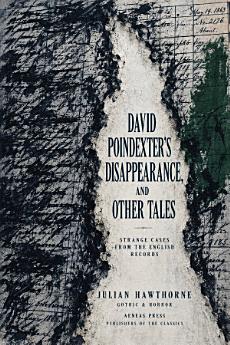
David Poindexter's Disappearance, and Other Tales: Strange Cases from the English Records
Julian Hawthorne
Sep 2026 · Aeneas Press
Ebook
124
Pages
family_home
Eligible
info
About this ebook
A Sussex parson deep in gambling debts meets his exact double, a highwayman, in a wood; one of them is found dead, the other rides back into the parson's life, and no court can prove which man he is — and around that, a set of tales about ghosts, obsession and the thinness of a personality. Julian Hawthorne grew up among Emerson, Thoreau and Melville, produced some fifty books, and later went to prison for mail fraud over a mining stock. He wrote identity as something that comes loose. Fifty-eight plates, among them Munch and Eastman Johnson, run from 1783 to 1912 and dwell on interiors, kinsmen and uncertain selves, the very ground these tales of doubled identity occupy.
A Sussex parson deep in gambling debts meets his exact double, a highwayman, in a wood; one of them is found dead, the other rides back into the parson's life, and no court can prove which man he is — and around that, a set of tales about ghosts, obsession and the thinness of a personality. Julia...
Discover more
About the author
Julian Hawthorne (1846–1934) was an American novelist, short story writer, and journalist. Son of Nathaniel Hawthorne, he served as a war correspondent for the New York Journal and contributed to numerous periodicals. His works include the novels Archibald Malmaison and The Golden Fleece, the story collection David Poindexter's Disappearance, and the memoir Hawthorne and His Circle.
Julian Hawthorne (1846–1934) was an American novelist, short story writer, and journalist. Son of Nathaniel Hawthorne, he served as a war correspondent for the New York Journal and contributed to numerous periodicals. His works include the novels Archibald Malmaison and The Golden Fleece, the sto...
Rate this ebook
Tell us what you think.
Reading information
Smartphones and tablets
Install the Google Play Books app for Android and iPad/iPhone. It syncs automatically with your account and allows you to read online or offline wherever you are.
Laptops and computers
You can listen to audiobooks purchased on Google Play using your computer's web browser.
eReaders and other devices
To read on e-ink devices like Kobo eReaders, you'll need to download a file and transfer it to your device. Follow the detailed Help Center instructions to transfer the files to supported eReaders.