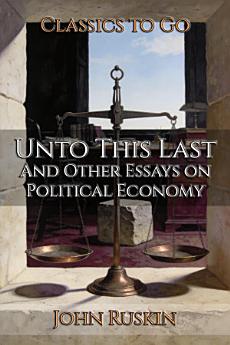
Unto This Last: Restored Classics to Go Edition
About this ebook
Discover more
About the author
John Ruskin was one of the most original and wide-ranging voices of the nineteenth century, a writer, critic, artist, and social thinker whose life moved between the worlds of beauty, economics, and moral reform. Born in London and educated at Oxford, he first gained fame as an art critic, championing the work of Turner and helping redefine how readers thought about painting, architecture, and the relationship between art and nature. Over time, his interests expanded far beyond aesthetics into questions of labor, society, education, and justice, and he became an influential advocate for humane values in an industrial age. His writing on political economy challenged the assumption that wealth alone measures progress, insisting instead that dignity, community, and the well-being of workers must stand at the center of any healthy society. Across his essays, lectures, and criticism, Ruskin explored themes of beauty, truth, craftsmanship, environmental responsibility, and the moral costs of unchecked materialism—ideas that feel strikingly current in a world still wrestling with inequality, consumerism, and the strain placed on nature and human work. His legacy endures because he refused to separate culture from conscience, showing readers that art and economics alike shape the quality of our lives. Today, Ruskin remains especially rewarding for readers interested in social criticism, environmental thought, art history, and anyone drawn to writing that asks not only what is valuable, but what is truly worth living for.