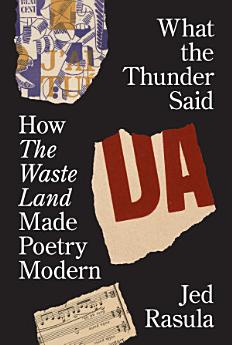
What the Thunder Said: How The Waste Land Made Poetry Modern
Dec 2022 · Princeton University Press
Ebook
344
Pages
family_home
Eligible
info
About this ebook
A rich cultural history of the creation, explosive impact, and enduring influence of T. S. Eliot’s modernist masterpiece
When T. S. Eliot published The Waste Land in 1922, it put the thirty-four-year-old author on a path to worldwide fame and the Nobel Prize. “But,” as Jed Rasula writes, “The Waste Land is not only a poem: it names an event, like a tornado or an earthquake. Its publication was a watershed, marking a before and after. It was a poem that unequivocally declared that the ancient art of poetry had become modern.” In What the Thunder Said, Rasula tells the story of how The Waste Land changed poetry forever and how this cultural bombshell served as a harbinger of modernist revolution in all the arts, from abstraction in visual art to atonality in music.
From its famous opening, “April is the cruellest month, breeding / Lilacs out of the dead land,” to its closing Sanskrit mantra, “Shantih shantih shantih,” The Waste Land combined singular imagery, experimental technique, and dense allusions, boldly fulfilling Ezra Pound’s injunction to “make it new.” What the Thunder Said traces the origins, reception, and enduring influence of the poem, from its roots in Wagnerism and French Symbolism to the way its strangely beguiling music continues to inspire readers. Along the way, we learn about Eliot’s storied circle, including Wyndham Lewis, Virginia Woolf, and Bertrand Russell, and about poets like Mina Loy and Marianne Moore, whose innovations have proven as consequential as those of the “men of 1914.”
Filled with fresh insights and unfamiliar anecdotes, What the Thunder Said recovers the explosive force of the twentieth century’s most influential poem.
A rich cultural history of the creation, explosive impact, and enduring influence of T. S. Eliot’s modernist masterpiece
When T. S. Eliot published The Waste Land in 1922, it put the thirty-four-year-old author on a path to worldwide fame and the Nobel Prize. “But,” as Jed Rasula writes, “The Wa...
About the author
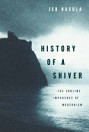
Jed Rasula is the Helen S. Lanier Distinguished Professor at the University of Georgia. He is the author of nine scholarly books and three poetry collections and the coeditor of two anthologies. His recent books include Destruction Was My Beatrice: Dada and the Unmaking of the Twentieth Century and History of a Shiver: The Sublime Impudence of Modernism.
Jed Rasula is the Helen S. Lanier Distinguished Professor at the University of Georgia. He is the author of nine scholarly books and three poetry collections and the coeditor of two anthologies. His recent books include Destruction Was My Beatrice: Dada and the Unmaking of the Twentieth Century a...
Rate this ebook
Tell us what you think.
Reading information
Smartphones and tablets
Install the Google Play Books app for Android and iPad/iPhone. It syncs automatically with your account and allows you to read online or offline wherever you are.
Laptops and computers
You can listen to audiobooks purchased on Google Play using your computer's web browser.
eReaders and other devices
To read on e-ink devices like Kobo eReaders, you'll need to download a file and transfer it to your device. Follow the detailed Help Center instructions to transfer the files to supported eReaders.