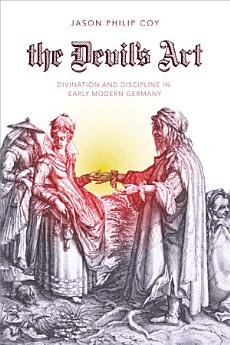
The Devil's Art: Divination and Discipline in Early Modern Germany

· University of Virginia Press
Ebook
192
Pages
Tools

About this ebook

In early modern Germany, soothsayers known as wise women and men roamed the countryside. Fixtures of village life, they identified thieves and witches, read palms, and cast horoscopes. German villagers regularly consulted these fortune-tellers and practiced divination in their everyday lives. Jason Phillip Coy brings their enchanted world to life by examining theological discourse alongside archival records of prosecution for popular divination in Thuringia, a diverse region in central Germany divided into a patchwork of princely territories, imperial cities, small towns, and rural villages. Popular divination faced centuries of elite condemnation, as the Lutheran clergy attempted to suppress these practices in the wake of the Reformation and learned elites sought to eradicate them during the Enlightenment. As Coy finds, both of these reform efforts failed, and divination remained a prominent feature of rural life in Thuringia until well into the nineteenth century.

The century after 1550 saw intense confessional conflict accompanied by widespread censure and disciplinary measures, with prominent Lutheran theologians and demonologists preaching that divination was a demonic threat to the Christian community and that soothsayers deserved the death penalty. Rulers, however, refused to treat divination as a capital crime, and the populace continued to embrace it alongside official Christianity in troubled times. The Devil’s Art highlights the limits of Reformation-era disciplinary efforts and demonstrates the extent to which reformers’ efforts to inculcate new cultural norms relied upon the support of secular authorities and the acquiescence of parishioners. Negotiation, accommodation, and local resistance blunted official reform efforts and ensured that occult activities persisted and even flourished in Germany into the modern era, surviving Reformation-era preaching and Enlightenment-era ridicule alike.

Studies in Early Modern German History

In early modern Germany, soothsayers known as wise women and men roamed the countryside. Fixtures of village life, they identified thieves and witches, read palms, and cast horoscopes. German villagers regularly consulted these fortune-tellers and practiced divination in their everyday lives. Jas...

Discover more

About the author

Jason Philip Coy is Professor of History at the College of Charleston and coeditor of Migrations in the German Lands, 1500-2000.

Jason Philip Coy is Professor of History at the College of Charleston and coeditor of Migrations in the German Lands, 1500-2000.

Rate this ebook

Tell us what you think.

Reading information

Smartphones and tablets
Install the Google Play Books app for Android and iPad/iPhone. It syncs automatically with your account and allows you to read online or offline wherever you are.
Laptops and computers
You can listen to audiobooks purchased on Google Play using your computer's web browser.
eReaders and other devices
To read on e-ink devices like Kobo eReaders, you'll need to download a file and transfer it to your device. Follow the detailed Help Center instructions to transfer the files to supported eReaders.