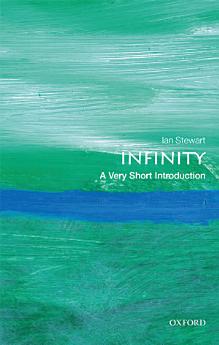
Infinity: A Very Short Introduction
માર્ચ 2017 · Oxford University Press
star
2 રિવ્યૂ
ઇ-પુસ્તક
144
પેજ
family_home
પાત્ર
info
આ ઇ-પુસ્તક વિશે
Infinity is an intriguing topic, with connections to religion, philosophy, metaphysics, logic, and physics as well as mathematics. Its history goes back to ancient times, with especially important contributions from Euclid, Aristotle, Eudoxus, and Archimedes. The infinitely large (infinite) is intimately related to the infinitely small (infinitesimal). Cosmologists consider sweeping questions about whether space and time are infinite. Philosophers and mathematicians ranging from Zeno to Russell have posed numerous paradoxes about infinity and infinitesimals. Many vital areas of mathematics rest upon some version of infinity. The most obvious, and the first context in which major new techniques depended on formulating infinite processes, is calculus. But there are many others, for example Fourier analysis and fractals. In this Very Short Introduction, Ian Stewart discusses infinity in mathematics while also drawing in the various other aspects of infinity and explaining some of the major problems and insights arising from this concept. He argues that working with infinity is not just an abstract, intellectual exercise but that it is instead a concept with important practical everyday applications, and considers how mathematicians use infinity and infinitesimals to answer questions or supply techniques that do not appear to involve the infinite. ABOUT THE SERIES: The Very Short Introductions series from Oxford University Press contains hundreds of titles in almost every subject area. These pocket-sized books are the perfect way to get ahead in a new subject quickly. Our expert authors combine facts, analysis, perspective, new ideas, and enthusiasm to make interesting and challenging topics highly readable.
Infinity is an intriguing topic, with connections to religion, philosophy, metaphysics, logic, and physics as well as mathematics. Its history goes back to ancient times, with especially important contributions from Euclid, Aristotle, Eudoxus, and Archimedes. The infinitely large (infinite) is in...
વધુ શોધો
રેટિંગ અને રિવ્યૂ
2 રિવ્યૂ
લેખક વિશે
Professor Ian Stewart of Warwick University is a well-known and highly successful writer on mathematics and its applications. He has authored over 80 books including From Here to Infinity (OUP, 1996), Does God Play Dice? (Penguin, 1997), Symmetry: A Very Short Introduction (OUP, 2013), and the bestselling series The Science of Discworld I, II, III, and IV with Terry Pratchett and Jack Cohen.
Professor Ian Stewart of Warwick University is a well-known and highly successful writer on mathematics and its applications. He has authored over 80 books including From Here to Infinity (OUP, 1996), Does God Play Dice? (Penguin, 1997), Symmetry: A Very Short Introduction (OUP, 2013), and the be...
આ ઇ-પુસ્તકને રેટિંગ આપો
તમે શું વિચારો છો અમને જણાવો.
માહિતી વાંચવી
સ્માર્ટફોન અને ટૅબ્લેટ
Android અને iPad/iPhone માટે Google Play Books ઍપ ઇન્સ્ટૉલ કરો. તે તમારા એકાઉન્ટ સાથે ઑટોમૅટિક રીતે સિંક થાય છે અને તમને જ્યાં પણ હો ત્યાં તમને ઑનલાઇન અથવા ઑફલાઇન વાંચવાની મંજૂરી આપે છે.
લૅપટૉપ અને કમ્પ્યુટર
Google Play પર ખરીદેલ ઑડિઓબુકને તમે તમારા કમ્પ્યુટરના વેબ બ્રાઉઝરનો ઉપયોગ કરીને સાંભળી શકો છો.
eReaders અને અન્ય ડિવાઇસ
Kobo ઇ-રીડર જેવા ઇ-ઇંક ડિવાઇસ પર વાંચવા માટે, તમારે ફાઇલને ડાઉનલોડ કરીને તમારા ડિવાઇસ પર ટ્રાન્સફર કરવાની જરૂર પડશે. સપોર્ટેડ ઇ-રીડર પર ફાઇલો ટ્રાન્સ્ફર કરવા માટે સહાયતા કેન્દ્રની વિગતવાર સૂચનાઓ અનુસરો.