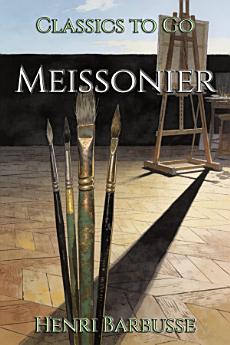
Meissonier: Restored Classics to Go Edition

· Otbebookpublishing
Ebook
39
Pages
Eligible

About this ebook

Ernest Meissonier emerges as an artist of rare exactitude, driven by an almost obsessive devotion to truth in costume, military detail, gesture, and the changing look of nature. He would go to extraordinary lengths to study life directly, even sending cavalry across a grain field to observe them for a canvas of 1807, and his refusal to paint battles he had never seen reveals the rigor behind his realism. From a modest childhood in Lyons and Paris, where his mother's miniature-painting tools first awakened his vocation, he was drawn early toward art despite school reports that complained he sketched when he should have studied. Apprenticed briefly to a druggist, then admitted to studios, he found his subject among soldiers and Napoleonic imagery, even as his father worried over the risks of an artist's life. Poverty, persistence, and clever connections carried him from fan painting and religious commissions to illustrated books, where his tiny, exquisitely finished vignettes won recognition. His etchings, though rare and difficult to preserve, show the same precision and expressive power, while paintings such as 1814, The Reader, The Game of Chess, and The Players at Bowls confirmed the strength of his small-scale art. Critics praised his command of light, composition, and character, seeing in his scenes not static reconstructions but vivid stage settings taken from life. This edition has been fully restored with modern typesetting, custom cover design.
Ernest Meissonier emerges as an artist of rare exactitude, driven by an almost obsessive devotion to truth in costume, military detail, gesture, and the changing look of nature. He would go to extraordinary lengths to study life directly, even sending cavalry across a grain field to observe them ...

Discover more

About the author

Henri Barbusse was a French novelist, journalist, poet, and committed political voice whose life reflected the turbulence of Europe in the first half of the twentieth century. Born in 1873, he began as a literary writer shaped by symbolism and realism, but the devastation of the First World War transformed both his outlook and his art, turning him into one of the most forceful antiwar figures of his age. He went on to become an outspoken advocate for social justice and international peace, aligning his writing with the struggles of ordinary people and the moral crises of modern history. Across his career, Barbusse produced fiction, criticism, and polemical writing marked by a deep concern for suffering, inequality, and the human cost of violence. His work is remembered for its unflinching honesty, its sympathy for soldiers and workers, and its insistence that literature should confront injustice rather than look away. He remains relevant today because his themes of war, political conviction, and the search for human dignity still speak powerfully to readers living with conflict and social division. Barbusse's legacy endures as that of a writer who fused artistic seriousness with ethical urgency, and he will especially appeal to readers interested in war literature, politically engaged writing, and the enduring question of how art can respond to history.

Henri Barbusse was a French novelist, journalist, poet, and committed political voice whose life reflected the turbulence of Europe in the first half of the twentieth century. Born in 1873, he began as a literary writer shaped by symbolism and realism, but the devastation of the First World War t...

Rate this ebook

Tell us what you think.

Reading information

Smartphones and tablets
Install the Google Play Books app for Android and iPad/iPhone. It syncs automatically with your account and allows you to read online or offline wherever you are.
Laptops and computers
You can listen to audiobooks purchased on Google Play using your computer's web browser.
eReaders and other devices
To read on e-ink devices like Kobo eReaders, you'll need to download a file and transfer it to your device. Follow the detailed Help Center instructions to transfer the files to supported eReaders.