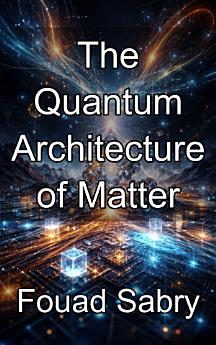
About this ebook
Unlock the fundamental equations that dictate the behavior of everything you can touch.
The complexity of the many-body problem often obscures the elegant quantum mechanical laws governing solid-state physics.
What are the benefits?
- Master the mathematical derivation of many-electron wavefunctions.
- Understand the physical implications of the Pauli Exclusion Principle.
- Bridge the gap between theoretical physics and computational chemistry.
- Decode the primary forces that stabilize sub-atomic structures.
- Gain unparalleled depth with 210 curated concepts mapped across 21 chapter-specific appendices for comprehensive technical mastery.
What is the roadmap?
1 - The Quantum Landscape: Defining the Scope of Electronic Structure
2 - The Hamiltonian Framework: Energy Operators in Many-Body Systems
3 - Solving the Schrödinger Equation: The Search for the Universal Wavefunction
4 - The Adiabatic Approximation: Decoupling Nuclei and Electrons
5 - Indistinguishability and Symmetry: The Geometry of Particle Exchange
6 - The Exclusion Principle: Why Matter Takes Up Space
7 - Slater Determinants: Constructing Antisymmetric Wavefunctions
8 - The Hartree-Fock Method: The Mean Field Approximation
9 - The Self-Consistent Field: Iterative Paths to Convergence
10 - Exchange and Correlation: The Hidden Costs of Electron Interaction
11 - Density Functional Theory: From Wavefunctions to Electron Density
12 - The Hohenberg-Kohn Theorems: The Proof of Density Primacy
13 - Kohn-Sham Equations: Mapping Interacting Systems to Non-Interacting Ones
14 - Second Quantization: Operators of Creation and Annihilation
15 - Green's Functions in Solids: Propagating Quantum Information
16 - Configuration Interaction: Exploring the Full Hilbert Space
17 - Coupled Cluster Theory: The Gold Standard of Quantum Chemistry
18 - Many-Body Perturbation Theory: Correcting the Mean Field
19 - Quantum Monte Carlo: Stochastic Solutions to the Many-Body Problem
20 - Relativistic Effects: When Electrons Approach the Speed of Light
21 - The Future of Fundamental Theory: From Classical Limits to Quantum Computing
Who is the target reader?
Designed for physicists, chemists, and materials scientists seeking a rigorous foundation in electronic structure.
How can you take action?
Stop relying on black-box approximations and gain the clarity that comes from understanding the universe at its most fundamental level.
Begin your journey into the heart of quantum mechanics today.