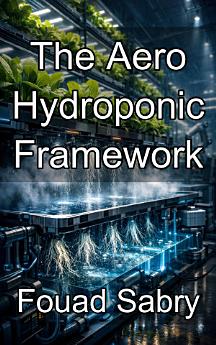
About this ebook
The secret to explosive plant growth isn't in the nutrients—it’s in the architecture of the void.
Traditional hydroponics often neglects the physical fluid dynamics and structural oxygenation required for peak metabolic efficiency, leading to stagnant growth and system failure.
What are the benefits?
- Master the fluid dynamics of high-pressure mist delivery systems.
- Design structural housing that maximizes root-zone oxygenation.
- Optimize spatial efficiency for industrial-scale vertical farming.
- Implement advanced materials to prevent biofouling and structural decay.
- Gain unparalleled depth with 210 curated concepts mapped across 21 chapter-specific appendices for comprehensive technical mastery.
What is the roadmap?
1 - The Genesis of Aero-Hydroponics: Defining the Architectural Shift in Soilless Culture
2 - Principles of Fluid Dynamics: Mastering Liquid Movement in High-Efficiency Systems
3 - The Anatomy of the Root Zone: Biological Requirements for Structural Design
4 - Structural Enclosure Engineering: Designing the Physical Housing for Air-Bound Roots
5 - Aerosol Physics and Droplet Size: The Science of Optimal Nutrient Delivery
6 - Nozzle Technology and Atomization: The Mechanics of High-Pressure Delivery
7 - The Mechanics of Oxygenation: Maximizing Gas Exchange in the Rhizosphere
8 - Vertical Farming Spatial Optimization: Architecting for Density and Scale
9 - Materials Science in System Design: Selecting Polymers and Metals for Longevity
10 - High-Pressure Pump Systems: The Heart of the Aero-Hydroponic Infrastructure
11 - Plumbing and Manifold Geometry: Ensuring Uniform Pressure Across the Grid
12 - The Thermodynamics of the Root Zone: Managing Heat Dissipation in Closed Systems
13 - Sensors and Automated Monitoring: Electronic Oversight of Physical Infrastructure
14 - Biofouling and Clog Prevention: Engineering for Maintenance and Reliability
15 - Structural Load and Weight Distribution: Supporting Massive Growth in Vertical Planes
16 - The Physics of Evaporation: Controlling Humidity within the Infrastructure
17 - Modular Design and Scalability: Building Systems That Grow with Your Needs
18 - Hydrodynamics of Drainage: Efficient Return Systems and Waste Reduction
19 - Power Redundancy and Safety: Protecting the Infrastructure from Failure
20 - Sustainable Urban Integration: Fitting Aero-Hydroponics into Modern Cities
21 - The Future of Aero-Hydroponic Design: AI-Driven Architectures and Beyond
Who is the target reader?
Designed for agricultural engineers, architectural innovators, and advanced hydroponic system designers.
How can you take action?
Stop fighting your equipment and start building ecosystems that breathe, flow, and produce at their biological limit.
Engineer your future harvest today by mastering the physics of aero-hydroponic design.