About this ebook
The Value of Language Learning
Language is more than a tool for communication—it's the lens through which we view the world. When you learn Albanian, you’re not just memorizing vocabulary or grammar rules; you’re embracing centuries of history, folklore, and tradition. The Albanian language, with its unique linguistic roots and proud heritage, opens doors to the heart of the Balkans. Conversely, English stands as a global lingua franca, a passport to international opportunity, and a bridge to countless cultures and ideas.
Mastering the basics of both languages offers tangible benefits:
Enhanced travel experiences: Navigate Albanian cities, towns, and countryside with confidence, or welcome English-speaking visitors with warmth and understanding.
Business and career growth: Communicate with colleagues, partners, or clients in their native tongue, building trust and fostering successful collaborations.
Personal relationships: Connect more deeply with friends, family, or communities, whether in Albania, Kosovo, or the global Albanian diaspora.
Intellectual and cultural enrichment: Explore Albanian literature, history, and music, or access the vast world of English-language media and resources.
Understanding the Basics: A Two-Way Approach
This book takes a dual perspective. Each chapter is crafted to serve both English speakers learning Albanian and Albanian speakers learning English. This approach ensures:
Clear explanations in English, with targeted Albanian vocabulary and grammar.
Comparative notes highlighting similarities and differences between the two languages, helping you avoid common pitfalls.
Practical dialogues and real-life scenarios to ground your knowledge in authentic contexts.
A Brief Overview of the Albanian Language
Albanian, or Shqip, is one of Europe’s oldest languages. It forms its own branch within the Indo-European language family, making it distinct from its neighbors and a subject of fascination for linguists. Spoken by approximately 7 million people, primarily in Albania, Kosovo, North Macedonia, Montenegro, and by extensive communities in Italy, Greece, Switzerland, Germany, and the United States, Albanian is a living testament to the resilience and adaptability of its speakers.
Key features of the Albanian language include:
Two main dialects: Gheg (north) and Tosk (south). Standard Albanian is based primarily on the Tosk dialect.
Unique vocabulary: While influenced by Latin, Greek, Turkish, and Slavic languages, Albanian retains many ancient features.
Distinct grammar: Cases, genders, and verb tenses can present challenges to English speakers, but also offer new ways of expressing ideas.
English: A Global Perspective
English, originating in England and now spoken by over 1.5 billion people worldwide, is the most widely used second language. It’s the official or national language in over 70 countries and the working language of international business, science, aviation, and the internet.
Key features of the English language include:
Simple verb conjugation compared to many other languages, but with many irregular verbs.
Rich vocabulary drawn from Latin, French, Germanic, and many other sources.
Flexible sentence structure, allowing creativity and nuance.
For Albanian speakers, learning English opens a world of opportunity and cultural interaction. Yet, English’s complex spelling, pronunciation, and idiomatic expressions can be hurdles that this book will help you overcome.
Book Structure and Approach
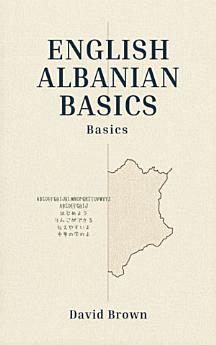
To guide your learning, English Albanian Basics is organized into clearly defined chapters, each focusing on a core theme or skill:
Vocabulary building: Learn the most important words and phrases for everyday life.
Grammar essentials: Understand sentence structure, verb tenses, and more.
Pronunciation guidance: Master the sounds of both languages, with tips on accent and intonation.
Cultural notes: Appreciate the customs, values, and traditions reflected in language use.
Dialogues and scenarios: Practice real conversations for travel, business, and daily life.
Exercises and practice tasks: Reinforce your knowledge and track your progress.
Each chapter includes summaries, sample dialogues, and actionable tips. You’ll also find comparative tables, lists of common mistakes, and pronunciation aids, all designed to help you achieve fluency and confidence.
The Importance of Context
Language doesn’t exist in a vacuum. Words and grammar take on meaning only in context—whether that’s ordering food at a market, introducing yourself at a business meeting, or understanding a joke told by a friend. This book emphasizes contextual learning, offering you the tools to not only understand the rules, but also apply them in real situations.
Tip: Don’t be afraid to make mistakes. Language learning is an active process, and every error is an opportunity for growth.
Setting Expectations and Goals
As you embark on this journey, it’s important to set realistic goals. Fluency takes time and consistent practice, but mastering the basics can happen much more quickly with a focused, practical approach. This book is designed to:
Give you a strong foundation in both languages.
Equip you with the phrases and structures needed for everyday communication.
Build your confidence to speak, listen, read, and write.
Dedicate regular time to studying and practicing. Make use of the exercises, repeat dialogues aloud, and don’t hesitate to revisit challenging sections. The more you use your new language skills, the faster you’ll progress.
Overcoming Common Challenges
Every language learner faces obstacles. Some of the most common include:
Pronunciation difficulties: Both English and Albanian have sounds that may not exist in your native language. Listening, repeating, and practicing aloud are key.
False friends and literal translations: Be wary of words that look similar but differ in meaning.
Grammar differences: Cases in Albanian, irregular verbs in English—these require patience and targeted practice.
Fear of speaking: Many learners hesitate to converse, fearing mistakes. Remember, communication is the goal—not perfection.
This book addresses these challenges directly through tailored exercises, cultural notes, and encouragement to practice in real-world settings.
The Cultural Connection
Learning a language means stepping into another culture. For English speakers, Albania’s history, hospitality, and traditions offer a rewarding experience. For Albanian speakers, the global reach of English provides access to endless opportunities for growth and discovery.
You’ll find that the language shapes how ideas are expressed, humor is shared, and relationships are built. Embracing these cultural nuances enriches your learning and ensures you don’t just speak the language, but truly connect with its speakers.
Getting the Most from This Book
To make the most of English Albanian Basics, consider these strategies:
Active engagement: Don’t just read—write notes, say phrases aloud, and complete the exercises.
Consistent practice: Even short daily study sessions are more effective than sporadic, lengthy ones.
Use all your senses: Listen to music, watch videos, and speak whenever you can.
Seek feedback: Practice with native speakers or language partners if possible.
As you work through the chapters, keep a journal of new vocabulary, phrases, and questions. The process of writing and reflecting will deepen your understanding and retention.
A Note on Pronunciation and Spelling
Pronunciation is a key focus of this book. Each chapter offers guidance on how to correctly produce sounds in both languages. For Albanian, the correspondence between letters and sounds is generally regular, while English can be unpredictable. Pay close attention to the guidance provided, and take advantage of online resources or audio tools where possible.
Spelling, especially in English, can be challenging due to silent letters and irregular patterns. Practice writing words and sentences by hand to reinforce correct spelling.
What Lies Ahead
In the chapters that follow, you will:
Build a robust vocabulary for greetings, daily activities, travel, and more.
Understand and apply essential grammar rules.
Practice real-world dialogues and scenarios.
Gain insight into the cultures behind the languages.
Whether you are preparing for a trip, seeking to connect with family, or simply pursuing a love of language, English Albanian Basics will support you every step of the way.
Reminder: The journey of a thousand words begins with a single phrase. Embrace curiosity, celebrate small victories, and enjoy the process of unlocking a new language.
Let us now take the first step together—into the fascinating world of English and Albanian.
About the author
David Brown is a storyteller fascinated by the "fracture between worlds" and the "invisible scripts of power" that govern human survival. With a narrative style that moves restlessly between "stark clarity and chaotic nightmare," Brown explores themes of memory, selection, and the "cages we build" for ourselves.
In To Than Chi Ton, she utilizes a unique dual-language format to mirror the "split consciousness" of her characters, blending the traditions of gothic bureaucracy with the high-stakes world of martial arts fantasy. Brown not only writes but also designs and provides the art for her works, creating a holistic, "ornate" experience for the reader. She currently lives and works within the creative "rooms" of her own making, always seeking the "chill of recognition" in the stories she tells.