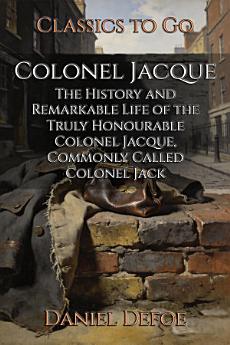
Colonel Jacque: Restored Classics to Go Edition
About this ebook
Discover more
About the author
Daniel Defoe was an English writer, journalist, pamphleteer, and businessman whose long, restless life unfolded against the turbulence of late seventeenth- and early eighteenth-century Britain. Born in London to a tradesman's family, he was educated for the ministry but soon turned toward commerce, politics, and writing, moving through bankruptcy, imprisonment, and public controversy with remarkable resilience. These experiences gave his prose its distinctive energy and its eye for the practical realities of ordinary life. He became one of the pioneers of the English novel, shaping fiction with a vivid sense of realism, moral reflection, and documentary detail, and he also produced influential political and social commentary that helped define the modern periodical voice. His work often follows people on the margins—adventurers, castaways, criminals, merchants, and survivors—exploring survival, self-making, repentance, labor, and the precarious line between success and ruin. Those concerns still feel immediate today, especially in a world shaped by economic uncertainty, reinvention, and the search for identity amid instability. Defoe's legacy lies in his ability to make individual experience feel both intimate and historically alive, and his writing continues to speak to readers interested in the origins of the novel, the ethics of ambition, and the hard-won dignity of endurance. Readers who enjoy realistic storytelling, moral complexity, and sharply observed lives of struggle and reinvention will find him especially rewarding.