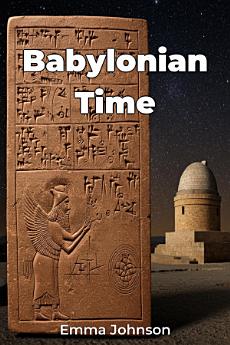
Babylonian Time
сак 2025 · Publifye AS
Электронная кніга
55
Старонкі
Інструменты
info
family_home
Падыходзячыя
info
Пра гэту электронную кнігу
Babylonian Time explores the origins of our modern timekeeping methods, revealing the sophisticated astronomical and mathematical systems of ancient Mesopotamia. It details how the Babylonians ingeniously predicted eclipses and shaped our perception of time. The book highlights the development and application of their sexagesimal system, a base-60 number system, which influenced everything from measuring angles to dividing time into hours, minutes, and seconds â a legacy still present today. It further shows how meticulous observations, recorded on cuneiform tablets, enabled these predictions and advanced their calendar systems.
The book provides historical context, explaining the social and political structure of ancient Mesopotamia and the role of priests and scribes in astronomical observation. It progresses by examining Babylonian mathematical techniques for predicting eclipses, exploring their calendar systems used to regulate agricultural cycles and religious observances, and analyzing the transmission of Babylonian astronomical knowledge to other cultures, including the Greeks.
By examining cuneiform texts and archaeological findings, Babylonian Time demonstrates how echoes of Babylonian thought are still audible in our daily lives.
Babylonian Time explores the origins of our modern timekeeping methods, revealing the sophisticated astronomical and mathematical systems of ancient Mesopotamia. It details how the Babylonians ingeniously predicted eclipses and shaped our perception of time. The book highlights the development an...
Ацаніце гэту электронную кнігу
Падзяліцеся сваімі меркаваннямі.
Чытанне інфармацыb
Смартфоны і планшэты
Усталюйце праграму "Кнігі Google Play" для Android і iPad/iPhone. Яна аўтаматычна сінхранізуецца з вашым уліковым запісам і дазваляе чытаць у інтэрнэце або па-за сеткай, дзе б вы ні былі.
Ноўтбукі і камп’ютары
У вэб-браўзеры камп’ютара можна слухаць аўдыякнігі, купленыя ў Google Play.
Электронныя кнiгi i iншыя прылады
Каб чытаць на такіх прыладах для электронных кніг, як, напрыклад, Kobo, трэба спампаваць файл і перанесці яго на сваю прыладу. Выканайце падрабязныя інструкцыі, прыведзеныя ў Даведачным цэнтры, каб перанесці файлы на прылады, якія падтрымліваюцца.