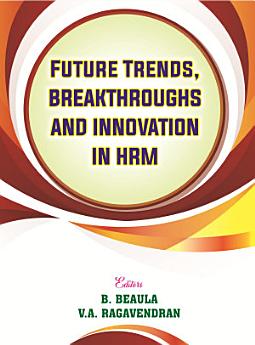
Future Trends, Breakthroughs and Innovation in HRM
About this ebook
Data-Driven Decision Making: The use of data analytics and artificial intelligence in HRM is expected to continue growing.
Remote Work and Hybrid Models: The COVID-19 pandemic accelerated the adoption of remote work.
Skills Development and Lifelong Learning: Continuous learning and upskilling are becoming essential due to the rapid pace of technological advancements.
Artificial Intelligence (AI) in Recruitment: AI can streamline and improve the recruitment process by automating tasks like resume screening, candidate sourcing, and initial interviews.
Gig Economy and Contingent Workforce Management: As the gig economy expands, HRM will need to adapt to manage both traditional employees and contingent workers effectively, ensuring fairness and compliance.
Diversity, Equity, and Inclusion (DEI): DEI initiatives are gaining prominence as organizations recognize the importance of creating inclusive workplaces.
Employee Experience (EX): HRM is shifting towards focusing on enhancing the overall employee experience.
Discover more
Ratings and reviews

- Flag inappropriate

- Flag inappropriate

- Flag inappropriate
About the author
B. Beaula, Assistant Professor in Business Administration, Mannar Thirumalai Naicker College, Madurai, Tamil Nadu, India
V.A. Ragavendran, Assistant Professor in Business Administration, Mannar Thirumalai Naicker College, Madurai, Tamil Nadu, India