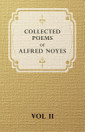
About this ebook
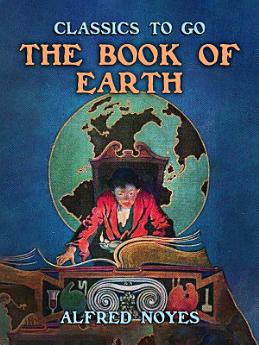
Excerpt: "Let the stars fade. Open the Book of Earth. Out of the Painted Desert, in broad noon, Walking through pine-clad bluffs, in an air like wine, I came to the dreadful brink. I saw, with a swimming brain, the solid earth Splitting apart, into two hemispheres, Cleft, as though by the axe of an angry god. On the brink of the Grand Canyon,"
Excerpt: "Let the stars fade. Open the Book of Earth. Out of the Painted Desert, in broad noon, Walking through pine-clad bluffs, in an air like wine, I came to the dreadful brink. I saw, with a swimming brain, the solid earth Splitting apart, into two hemispheres, Cleft, as though by the axe of ...
Discover more
About the author
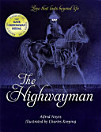
Alfred Noyes (1880-1958) was an English poet, short story writer, and playwright whose lyrical and narrative poetry captivated early 20th-century audiences. Born in Wolverhampton, Noyes attended Exeter College, Oxford, but left before completing his degree to pursue a literary career. His early work, including the celebrated collection "The Loom of Years" (1902), showcased his mastery of rhythm and rhyme, earning him comparisons to Tennyson and Kipling.Noyes' most famous poem, "The Highwayman" (1906), remains a staple in anthologies for its haunting narrative and vivid imagery. His ability to blend romance with adventure captured the imaginations of readers and influenced contemporary writers, including C.S. Lewis and J.R.R. Tolkien.Despite his popularity, Noyes faced criticism for his traditional style during the rise of Modernism. He staunchly defended the value of narrative poetry and was vocal in his opposition to the fragmented forms of T.S. Eliot and Ezra Pound. This controversy highlighted the tension between literary movements and underscored Noyes' commitment to accessible, emotionally resonant verse.Noyes also ventured into science fiction with "The Last Man" (1940), exploring themes of apocalypse and human resilience. His later years were marked by a deepening Catholic faith, which permeated his work and led to his conversion in 1927. This spiritual journey added a layer of introspection to his poetry, reflecting broader cultural shifts towards existential inquiry in the post-war era.Alfred Noyes' legacy endures through his evocative storytelling and his unwavering belief in the power of poetry to connect and inspire. His work continues to resonate, offering a bridge between the romantic past and the complex modern world.
Alfred Noyes (1880-1958) was an English poet, short story writer, and playwright whose lyrical and narrative poetry captivated early 20th-century audiences. Born in Wolverhampton, Noyes attended Exeter College, Oxford, but left before completing his degree to pursue a literary career. His early w...
Rate this ebook
Tell us what you think.
Reading information
Smartphones and tablets
Install the Google Play Books app for Android and iPad/iPhone. It syncs automatically with your account and allows you to read online or offline wherever you are.
Laptops and computers
You can listen to audiobooks purchased on Google Play using your computer's web browser.
eReaders and other devices
To read on e-ink devices like Kobo eReaders, you'll need to download a file and transfer it to your device. Follow the detailed Help Center instructions to transfer the files to supported eReaders.