About this ebook
Do you say yes when you desperately want to say no? Do you worry about disappointing people, overthink conversations long after they end, or feel guilty whenever you choose your own needs over someone else's expectations?
Perhaps you're the person everyone depends on—the one who always helps, always listens, and always tries to keep the peace.
But behind your kindness, you may be hiding exhaustion, resentment, and the fear that people won't love you as much if you stop doing everything for them.
You might tell yourself that you're simply being nice. Yet deep down, you know there's a difference between genuinely wanting to help someone and feeling that you have no choice.
What if the habit of keeping everyone else happy is costing you your peace, confidence, and sense of self?
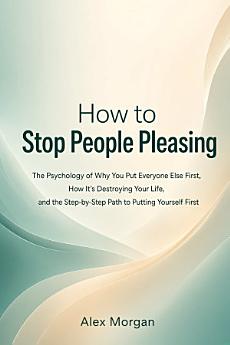
How to Stop People Pleasing is a practical, step-by-step guide to understanding the psychology behind people-pleasing, breaking free from unhealthy patterns, and learning to put yourself first without becoming selfish, uncaring, or unkind.
You'll discover why saying no can feel so uncomfortable, how the fear of rejection can influence your decisions, and what it takes to stop living according to everyone else's expectations.
Most importantly, you'll learn how to build healthier boundaries, communicate your needs with confidence, and create relationships in which you can be yourself without constantly earning your place.
INSIDE THIS BOOK, YOU'LL DISCOVER HOW TO:
✓ Understand the Psychology Behind People-Pleasing — Explore how fear of rejection, the need for approval, conflict avoidance, and learned behaviors can contribute to putting everyone else first.
✓ Recognize the Hidden Cost of Always Saying Yes — Understand how chronic people-pleasing can contribute to emotional exhaustion, resentment, neglected personal goals, and the feeling that you've lost touch with who you really are.
✓ Stop Feeling Guilty for Putting Yourself First — Learn to challenge the belief that prioritizing your needs makes you selfish and develop a healthier understanding of what it means to care for yourself.
✓ Learn to Say No Without Overexplaining — Discover practical ways to decline requests, communicate your limits, and resist the urge to justify every decision just to make others comfortable.
✓ Break Free From the Fear of Disappointing People — Develop healthier ways to handle disapproval, tolerate uncomfortable emotions, and recognize that someone else's disappointment doesn't automatically mean you've done something wrong.
✓ Stop Overthinking Every Interaction — Learn to recognize patterns of replaying conversations, worrying about what others think, and searching for reassurance after expressing your needs.
✓ Build Healthy Boundaries Without Feeling Cruel — Understand how to protect your time, energy, and emotional well-being while maintaining relationships based on mutual respect.
✓ Stop Taking Responsibility for Everyone's Feelings — Learn the difference between being considerate and believing you must keep everyone happy, prevent every conflict, or fix every problem.
✓ Develop Confidence in Your Own Decisions — Practice trusting your judgment, identifying your values, and making choices based on what matters to you rather than automatically seeking approval.
✓ Create Healthier, More Balanced Relationships — Discover how to move away from one-sided dynamics and develop relationships in which your needs, opinions, and boundaries matter too.
YOU CAN BE A GOOD PERSON WITHOUT MAKING EVERYONE HAPPY.
One of the hardest parts of overcoming people-pleasing is realizing that the very behaviors you use to maintain relationships may be preventing you from experiencing them fully.
You may agree to things you don't want to do because you're afraid of being disliked. You may hide your opinions to avoid conflict. You may give so much of your time and energy to others that there's little left for your own goals, happiness, or rest.
And when you finally try to put yourself first, guilt may immediately appear.
You might wonder whether you're being selfish, whether someone is upset with you, or whether you should take back your decision just to restore the peace.
But being considerate doesn't mean abandoning yourself.
You can care about other people's feelings without making yourself responsible for managing them. You can be generous without giving beyond your limits. You can love people without agreeing with everything they say or doing everything they ask.
And you can say no without becoming a bad friend, partner, family member, or person.
This book will help you begin recognizing the difference between kindness that comes from genuine choice and people-pleasing driven by fear.
Because real freedom begins when you understand that you don't need everyone's approval to make a decision that is right for you.
IMAGINE WHAT LIFE COULD LOOK LIKE WHEN YOU STOP LIVING FOR EVERYONE ELSE.
Imagine saying no without spending the rest of the day feeling guilty.
Imagine expressing your opinion without immediately worrying that someone might disagree.
Imagine making decisions based on your own priorities instead of constantly asking yourself what everyone else will think.
Imagine having the time and energy to pursue your goals, nurture your interests, and care for yourself without feeling that you're letting somebody down.
You don't have to become cold, selfish, or indifferent to other people's needs to experience this kind of freedom.
You simply have to learn that your needs matter, too.
Changing long-standing people-pleasing habits takes practice. There may be moments when setting a boundary feels uncomfortable or when someone doesn't respond the way you hoped.
But discomfort doesn't automatically mean you've made the wrong decision.
With greater self-awareness, practical strategies, and consistent effort, you can begin making choices that reflect your values rather than your fear of disappointing others.
IT'S TIME TO STOP ABANDONING YOURSELF TO KEEP EVERYONE ELSE COMFORTABLE.
You have spent enough time worrying about whether everyone else is happy while wondering why you feel so drained.
You deserve relationships in which you can express yourself honestly. You deserve to protect your time without apologizing for existing. And you deserve to build a life that reflects your own needs, values, and aspirations.
You don't have to stop caring about people.
You have to stop believing that caring about them requires you to stop caring about yourself.
If you're ready to break free from people-pleasing, build healthier boundaries, strengthen your self-confidence, and finally start putting yourself first, this book is for you.
Stop saying yes out of fear. Stop sacrificing your peace for approval. Stop making everyone else's happiness your responsibility.
Your life belongs to you, too. It's time to start living like it.